Uncovering Social Work's Colonial Roots and Legacies
Hi, my name is Tina Odun. My name is Eleanor Hogan. We're social work apprentices pursuing bachelor's in social work in the United Kingdom. Welcome to the Decolonize and Social Work Field Education podcast.
Through this podcast series we have been exploring different themes within the decolonising social work field education or placements as we know it in the UK and what this means in our own social work practice. This is a huge topic we have been learning about and there are still many areas left uncovered. To understand why we need decolonisation, first we need to understand the history behind it. How was colonisation and social work born?
History has so many facets like art, culture, food, and so many have been carried on today. And they say it, right? Understand the history so the mistakes of the past are not repeated in the future. For example, in the UK, social work started during the Industrial Revolution with the introduction of the Poor Law in 1934 and the concept of who is deserving and undeserving of support offered by the state. By understanding where social work started from, we can see how it is shaping social work today.
by a law that was created almost 200 years ago. So I was recently speaking with a student who said, why are you trying to decolonise social work in Britain? It's British land, it's like trying to tell people what to do in their own land. And I think I wasn't very prepared to answer this. I think I was mostly confused on where to start. So I think today's episode on uncovering social work education's colonial roots and legacies
It's really crucial because history is so important to make sense of the present. And we've learned from our social work teaching how at the individual level, early childhood experience, for example, can impact the present, the here and now, and even across generations. So let's hear more about today's topic from the episode guest, Dr. Sonia Tascone and our host, Dr. Charlotte Tussatsiwe.
and Dr. Abigail Joseph Magood.
Welcome to our episode on uncovering social work, education, colonial roots and legacies. Today we are co-hosting and my name is Dr. Sherlock Tassiwe, my co-host. Hello. Yes. Welcome everybody. I'm Abigail Joseph Magwood at the University of Applied Sciences in Osnabrück, Germany. And we've got our guest, our very honored guest, Dr. Sonja Tethkonen. Welcome.
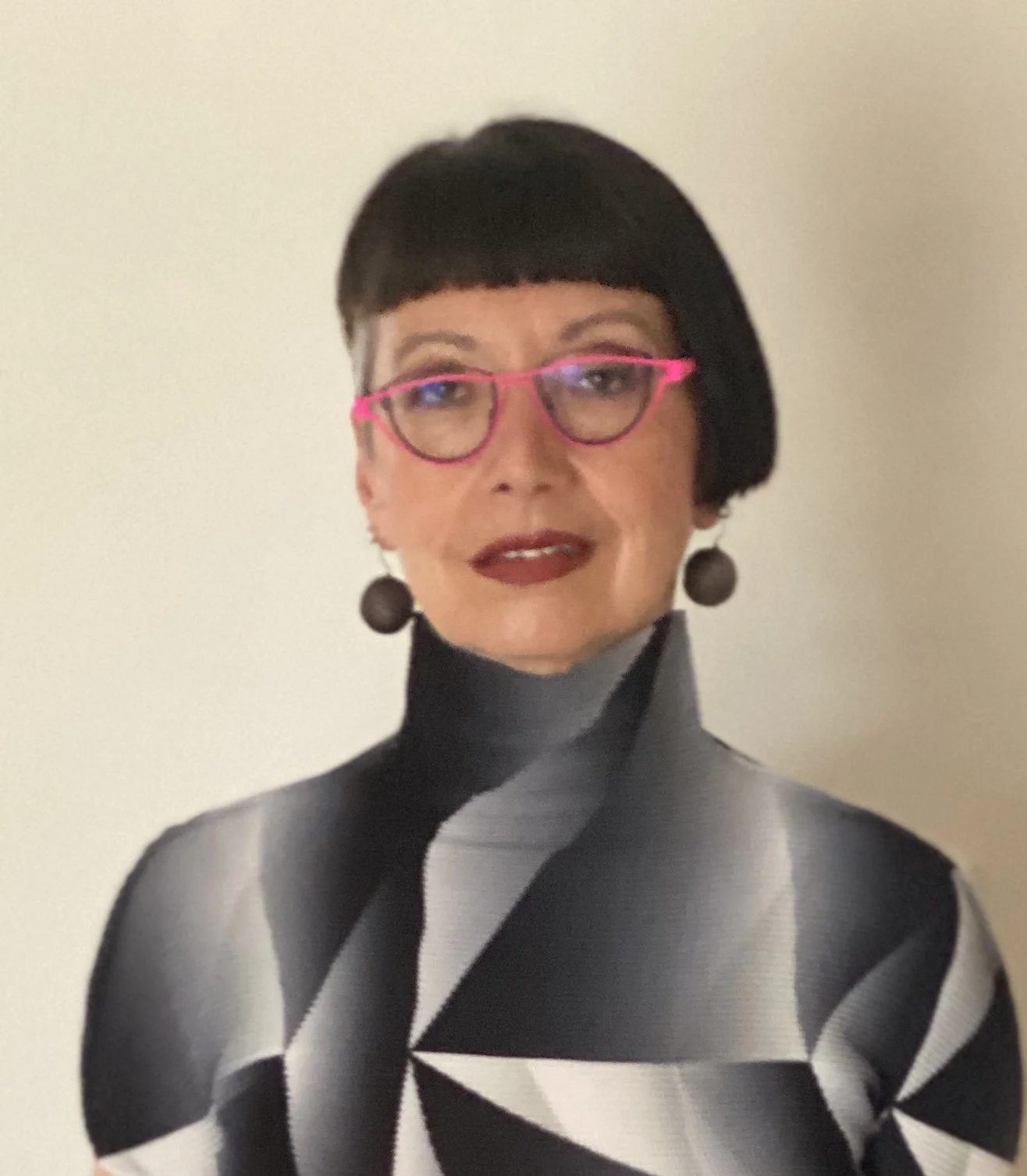
Hello, and thank you very much for inviting me to the podcast. I guess you want to know a little bit about me as well. I've got social work in my background for quite a lot of years. I finished my degree in 1986 and in 2006, I actually did a PhD in social work. I worked in child health in children's hospital, child protection. And while I was working in child protection, I realized that there was a wide length that we
that permeated our work and race was always a very strong issue for me because I was a migrant to Australia, but I was a non Anglo migrant. And that meant that had all sorts of impacts on in my world, in my life. And then I became interested in how we disseminate knowledge so that we can reach the most people to act for activism. And I turned to film.
And so film might actually be a great vehicle for changing people's minds around race issues or around any issue that's, and I actually started the first film festival, human rights film festival here in Perth. And then I became part of the human rights world festival across Australia as well. So yeah, background in all of that. And then because I loved film so much, did a PhD in film studies. So there's always been.
For me, always an analysis of race and always an analysis of colonization of what colonialism has done to the very frameworks of knowledge that we have. Absolutely. And we will delve deeper into what you're talking about, Dr. Sonia. I think let's also acknowledge Sonia and I are recording on the unceded territories of First Nations people in Australia. And as we talk about uncovering
social work education's colonial roots and legacies, we really acknowledge that we are on stolen land. Sovereignty was never ceded. This land was and always will be aboriginal land. So we want to talk about colonization in social work education. And people are asking, what does colonization have to do with the social work education, Sonia? Oh my goodness, it has everything to do with social work.
Colonialism becomes an important issue because of the heart of it is to actually create a system that sees others as inferior. It emerges out of this discourse of superiority. I don't want to call it attitude because I don't think social work at its heart has ever had a superior attitude, but I think it shows itself to have that in many of the ways that social work is practiced.
Many of the ways that social work education gets designed, it's actually, that is coming through all the time. When I was in Pacific islands for my work and they did have social work in Fiji, they had a social work department and all the textbooks, all the ways that they were teaching were coming from Australia and New Zealand. And they had operated and they had obviously dealt with child protection issues.
in different ways, they were dealing with those things before social work came along and the English based social work came along. But those textbooks could not address that, would not be able to address that. And so you were trying to impose a different worldview, completely different worldview on a group of people. So how can we say that colonialism doesn't continue? But one, that colonialism isn't important. Two, very important.
to look at what colonialism means in social work. Yes. And I can just relate with what you're saying because I was just remembering my own experiences and the type of books that I read. I was reading Compton and Galloway, P. Cassad-Minnaham, and this is social work education in Uganda. And you can imagine how those Western texts have case studies, they have theories.
they are talking about realities that are not really local, that don't speak to the experiences of people in Uganda. And I think if we want to try and understand what colonization is, let's define it as the imposition of one's culture, of one's worldview, of the colonizer's perspective on another group of people, on another culture that has its own ways of doing things, ways of knowing.
and ways of learning that is colonization. I wonder if you want to elaborate on Eurocentric frameworks that you still see underpinning social work in colonized societies. Okay, look at working in child protection and working in child health. Two examples that I can tell you very clearly show the Eurocentric view is in parenting and how we view mothers.
In the culture that I come from, women are central. Women are central in, I know that there is a view that Latin men are dominant and so on. It has never been my experience that men were dominant. It was my experience that women dominated the table. It may have just been my family. I don't know, but certainly I can say that mothers are revered. Mothers are central. Mothers are key.
to the culture that I came from. This is obviously I'm creating a stereotype here because I'm saying, oh, everyone's like this. No, not everybody's like that clearly, but I do know that the maternal is important. What I saw in child protection was a blaming of the mother, constant blaming of mothers, that everything that happened in a child's life had to do with some failing of the mother. It was not to help the mother.
carry through her task of being a mother, but it was to blame. So that really confronted me, I remember. But also some of the practices that were seen to be bordering on abuse within child protection, like when parents clip with their children, that was deemed to be child abuse. In my culture, that was actually caring for your child, taking care of them.
having them in your bed when they need the comfort of you. But in the culture that I came to here, there was a real urgency about the child having its own bedroom, its own bed, its own separate from the mother. And social work was carrying through that principle of mothering in that particular way, without taking into account that there are other ways. Indigenous mothers
to not actually realize that the parenting failures of some mothers, some indigenous mother, has to do with what we did. We dispossessed the whole, the land, we dispossessed the ability to practice culture. How do you rewind all of that? But I'm not here to talk about those kinds of solutions because I've blessed that field a long time ago and I'm sure that everything has moved on and I'm sure that social workers.
are really looking at how they are dealing with parenting and in terms of Indigenous people. Yeah, I think what you're really highlighting is still what is happening, honestly, because when you look at statistics on the number of children who are children who are in out-of-home care, they are disproportionately still overrepresented. And these are issues of colonisation, of dispossession, of intergenerational trauma.
of stolen generation are all still playing a part in taking children out of their homes. But then, like you're explaining, the focus is on the child. The focus is on blaming the individual, the mother, the parent, and less focus is on addressing the systemic structure issues and also the historical issues, in this case colonization, that is resulting into...
what we are seeing in today's child protection and out-of-home care in Australia, but also in most other countries like Canada, where we still have fast nations, children still disproportionately taken away from their homes. So thank you for elaborating on that, some of the Eurocentric frameworks that we can still see. Yes, Abigail? Maybe I can just very briefly say that it's the same in Britain for definite.
If we look at black children and children of color, that they are the majority of children that are in care. And I'm sure that it's a similar story in Germany and the European countries, just to make that connection also with racism. Yes, absolutely. Absolutely. And I think we still, we are trying to touch on what you write about in your book, Sonia, disrupting whiteness in social work. Is social work still white?
I think it still is. I think it still is in many ways. Look, I have been out of social work now for at least five years when I left Western Sydney. And I have to say that that was one of the best experiences of teaching social work I ever had. And the reason was because of how diverse the student cohort was. And they gave me the permission to actually question a lot of these.
In relation to so many other things, we still see that Eurocentric view present in hospital in the way that social workers operate in hospitals using the medical model as the primary central evidence base. That's the evidence that we have to have is the medical evidence, which does not take into account the holistic way of dealing with health. It does not take into account the ways that
that we are affected by how we are seen by others. we don't see ourselves in the face of others as having value, we then actually have the possibility of having all sorts of mental health problems. And so we end up in hospitals with mental health conditions because where we live, we don't feel a sense of belonging. Where we live doesn't give us.
that permission to be who we can be. Yeah. And you talk about the whiteness of knowledge or the assumption that Western knowledge is universal or is objectively true. Do you want to talk about that a little bit to elaborate on that? The whiteness of knowledge, what I mean is that the fact that we're all here,
And we're women of color and we're speaking in English. Language carries meaning. m Words carry meaning and those meanings are culturally bound. The fact that we're speaking in English and not in Spanish, it Charlotte, what's, is it a Rangangkole, my language? Your language and Abigail, I'm not sure what, if you have another language that you- It's actually English, I'm afraid.
English, okay. English is your one, isn't that interesting? And the fact that we are expressing ourselves in this language and okay, but where the books translated from Africa, your language in Uganda, sorry, I don't want to say it in case I say it completely wrong, the language, where the books even in Spanish, that are written in Spanish, translated into English so that those meanings are given to social work.
in the Anglosphere. Where are they? I haven't seen them. I have seen Spanish novels, like Isabel Allende gets translated into English all the time and various other fiction books, but I don't see the textbooks. It's still Eurocentric when you're talking about the colonizer, Spanish, the colonizer, Germany, the colonizer, English. These are the languages that get used.
and or translated from still. And when you think of Foucault and you think of discourses and institutions, as these two things go hand in hand, then we need to question the discourses. need to question the institutions that are then created to resolve or solve the problems that arise. uh what the discourse throws up, the problems that the discourse throws up, then we form
We create institutions to do that for us.
Absolutely. I think you're talking about the dominance of colonial languages. And in Africa, for example, we get identified according to the colonizers language. So I'll say, oh, we speak English. So we have Anglophone, Francophone countries. that's really because you got the colonizer and then you're speaking their language. But I also wanted to really plug in my own example of the colonial legacies.
from my experience in Uganda. The education system which was established there demonized our indigenous languages and we joined education systems when we are very, very young. So five years, I started a primary education and you couldn't speak your own indigenous language in school. We had to speak English and if we spoke our indigenous language there, we were always punished for speaking it.
So the education system that was established that devalued Indigenous languages, that categorized them as inferior, is still upheld up to now. And that is explaining why we are losing some of the Indigenous languages, some of the Indigenous knowledges, because we spend most of the time in school. And in these schools,
There is no value, there is no inclusion of indigenous language. So when we talk about colonial roots and colonial legacies, this is still happening. And it's coming from that narrative, colonial narrative that was established that English is the superior language that everyone must speak. So that idea of superiority and racial prejudice is still something that still rules.
But I wanted to turn to Abigail. in the West, why should we talk about colonization?
Yeah, thank you for that question. was asked by, I was talking about decoloniality and coloniality, but decoloniality and a colleague of mine and also a close friend was asking me, why do we need to decolonize in Europe? We're in the West. So that means that the knowledge from the West is what we should be using anyway. So why should we decolonize? And I must admit, I was like, I was rather shocked by the question.
And I said, why shouldn't Western knowledge be universal? If we're talking about social work, for example, who are the clients? They're marginalized people coming from colonized places into maybe Germany or I origin come from Britain. And we're just reproducing the harm that we've already created in colonizing those countries, forcing migrants, refugees to think, do, and be like
the Western way, as though it were supreme or, yeah, superior. For me, it's just a continuation of epistemic violence and, in general, coloniality, just continuing it. It's a never-ending story. And if people are asking that question, who are actually sociologists... Who are working in social world... I feel a bit at a loss, I must admit.
And I had just recently, yesterday, had a conversation with a colleague who was talking about punctuality and how six students who hadn't arrived yet were going to have to be punished. And he, the rule will be that if they come too late or if they don't attend that they'll lose one of their holiday days. And I was just, I was thinking, this is just unbelievable because there's no give and take. There's no flexibility and there's an expectation of
people coming from other countries, even if it's just for a semester or a year, to take on everything that is done by some people, maybe in Germany or in Britain, and to get the way that they've been for their 21 years, 26 years, or whatever. Yeah, I'm at a loss again for words. Absolutely. And I just want to plan in there and add that we have like
Most of our social work programs in Australia, they are full of international students and even domestic students who are from very many different cultures. And even maybe the same as in German, because we have international students moving out. In Sweden, you have international students coming out from different countries and going to the West to study. But when they reach the classroom, who is teaching them?
It's majority Anglo-Anglo academics. When they go to heads of department, who is there? They don't see themselves actually represented in the academia, in people who are teaching them in social work education. And what does that mean? Does that mean that people who are like them do not have knowledge that they are not able to teach? And what happens is that when we privilege white Western academics, even in culturally diverse contexts,
It results into privileging a Eurocentric curriculum, which also results into privileging Eurocentric scholarship, who is publishing in these journals, in uh who is on the board in these high impact social work journals. This is all privileging white Western and knowledges. And this is why we still say social work is still very white. And we must disrupt this because this does not represent the clientele, the community.
that social workers really come from. Yes, I'll leave you to take on Abigail from there. Thank you for that. Yes, like I said, rather shocking. And perhaps just now to this podcast, which focuses on our signature pedagogy, social work placement education. And with the question being, why should a social work student on a placement be concerned about social work's colonial history? Why should they be aware of that?
What role does it play? Because you need to look at where you are and who is being marginalized. Who are you serving? You should see yourselves as serving those people that you are working with. You're not doing things to them. You're actually serving them to help them be the best they could be. And why are they not the best that they could be? Is it because colonialism actually impacted them negatively? And how did colonialism?
impact them negatively as well. What did you do to their families? What did it in Australia disperse them? threw everything into absolute chaos. And it's very clear in Australia when you ask that question, what you need to say. But I know the context. And in Germany, you probably asked a different, slightly different set of questions about colonialism. What did Germany do to other countries? And that hence brought some of those people into the country.
What relationship, what power relationship still exists? We're really, I keep going back to Foucault because he was my favorite of all times when he talks about power and knowledge, how they're intertwined. Power, how do you look, you need to look at power through that lens of colonialism. You know, that you have, you don't have indigenous people in Germany, but that Germany actually went out and did things to other people.
The Holocaust certainly is something that you did, that Germany did within its own walls to Jewish, but also to gays, to some religious groups and to travellers. They also wanted to exterminate those groups, not just- Also to black people, which is not well known, but that was also the case during the Holocaust.
And just very briefly to say the colonial background of Germany is not taught in schools, that they were in East Africa, that they were in Burundi, Tanzania, Rwanda. They were, nobody really knows that. It's not taught at school, There you go. How important it is to ask the question. We have to ask it now. Yeah. And I just wanted to really inform that.
When we talk about colonization and depolonization, there is space for that emotion of discomfort. And I think it's important that we allow ourselves, and whether you're from colonizer or colonized, it's very important that we allow ourselves to actually feel that discomfort and to try and sit with it and understand where it's coming from and act differently. It's important that emotion.
is actually appreciated. And in social work, we are trying to talk about emotional disengagement. And I think this is where you talk about importance of bringing in the embodiment, isn't it? Exactly. It's definitely something that is needed. And I really liked that, Charlotte, that you said to stick with it and to hold that space and not try to flee and get away from it is so important.
And I was just hoping for you, Sonia, to maybe expand on this embodiment and on art, music, dance, profound thinking. I often catch myself wishing that there were a textbook about how to decolonize different study programs, different aspects, just because it's just so much. So how would you include that in social work? Field placement.
Okay. ah You're asking me about the creative really, because I hate calling it art. Because I think only in the West did it become this institutionalized thing called art. And we go and visit a museum. We go and visit a gallery. We go and visit these things. We've experienced art. I think art is a part of who we are. And many people around the world know that, that it is about how they move.
It is about how they express themselves, how they tell a story, how they tell a life story, how they tell the story of economics, politics. The fact that in other cultures, we're able to see them as stories. Social work is a story that's being told by various people. If we see our tales that way, rather than seeing it as then we see that what we practice.
It's also a story, it's also artful. The art of creation, having children. uh was a creator of something beautiful, create these beautiful beings that were not just as Julia Gillard in here called them, future workers. I didn't give birth to future workers. Children are future workers.
And then education needs to be to prepare them as workers. No, my children are much more than that. I don't want them just to be that. I want them to be more than that. As I said, I'm not sure that I answered your question entirely, but that's because I, I was very frustrated while I was in social work, which is probably why I went and did a PhD in film studies because I was very frustrated at how I felt this sense of wanting
to incorporate this artistic, this creative element. And everyone kept calling it art and social work or art rather than just being an embodied part of me and being an embodied part of all of us. No, it wasn't. It had to be something very distinct. What Sonia is talking about for the students not to be paralyzed by this colonial history.
We need to challenge the colonial narrative and catch ourselves when we are being colonial, when we are judging others as inferior, when we are judging the way they speak. And I think that helps us to embrace the indigenous ways of doing things, the indigenous knowledges that were really devalued because of colonization and colonialism.
And this is where the creative really comes in. This is where the music, the dance, the stories, the metaphors, the problems. So I think embracing that indigenous knowledge, local knowledge really as well. And also embracing or valuing the knowledge holders who might not necessarily be degree holders, social work degree holders. It could be the elders in the community who know more about this community than you do, although you have your professional degree from a university.
So think it's acknowledging that we all have knowledge and knowledge is also contextual, is defined differently. And there's different valued knowledge, knowledges really, not only Western knowledge. Yeah, I love that. I think that you have concluded and you've wrapped up, you summarized everything so beautifully. think you need to also be- I hope that you are one of the podcasts and Abigail too, think that. Are you? Do you have-
yourselves in the podcast? I think that this was the idea that we would be in this conversation and contributing as well as asking questions. It was really great.
Wow, that was a really interesting conversation. Thank you, Dr. Charlotte, Dr. Abigail and Dr. Sonia for all of that. And first of all, just going back to the start of the conversation, I'd like to say that a human rights film festival sounds like a very creative way to actually engage people about a difficult topic. So Tina, if you met that student again who asked you why decolonising is needed in social work in Britain, what would you say to them? If I meet that student today,
I'm in a better position to make them understand how diverse Britain is and how deep-rooted the history of imposing British worldview and culture onto other people is, which is the basis of colonialism or colonisation. And this has been manifested into social work education. I think most importantly, I would hope
that bold enough or more bold to not shy away from the other person or the other students discomfort or perceived discomfort because of how this topic can be viewed. So yeah.
Thank you for listening to another episode of the Decolonising Social Work Field Education Podcast. Thank you for supporting us through this learning journey and we hope that you have learned as much as we have.
You've been listening to the Decolonising Social Work Field Education podcast, Global Dialogues for Change, an international participatory project with students, experts by experience, practitioners and academics, funded by the European Association of Schools of Social Work, led by Associate Professor Henglian Lisa Chen at the University of Sussex and co-produced by Mitali Kulkarni. Visit our website.
dialogue SWFE.org and follow us online. Decolonising social work starts with you. Stay tuned.
Episode Description
Why should social work students care about the profession’s colonial history? In this episode, hosts Dr. Sharlotte Tusasiirwe and Dr. Abigail Joseph Magwood speak with Dr. Sonia Tascone to uncover how colonialism continues to shape social work education, practice, and knowledge today. Through global perspectives from Australia, Germany, Uganda, and the UK, they explore Eurocentric curricula, language dominance, racialized power dynamics, and the marginalisation of Indigenous ways of knowing. The conversation highlights the importance of discomfort, embodiment, and creative expression in decolonising practice.
Discussion Box
Join the Conversation
Have you listened to the episode and explored the learning materials?
Tell us
How have these resources shaped your understanding or actions when it comes to Decolonising Social Work Field Education?
Do you have ideas or suggestions for how we can build on this work?
What would you like to see next?
Whether you're a student (pre-placement or currently on placement), an educator, a practicing social worker or a placement provider, this space is for everyone.
Share your thoughts below and feel free to write in any language you’re most comfortable with.
DIVE FURTHER INTO THE TOPIC
CITE THE EPISODE
Tusasiirwe, S. and Magwood, A.J. (Co-hosts), Tascón, S. (Guest), Odu, T. and Hogan, E. (Student participants), Kulkarni, M. (Producer) and Chen, H.L. (Series lead) (2025) Uncovering Social Work Education’s Colonial Roots and Legacies [Podcast]. Decolonising Social Work Field Education Podcast, 15 May. Available at: https://www.dialogueswfe.org/episode-10 (Accessed: 15 May 2025).
Episodes